
Baptism for Kids
Helping Your Child Understand and Respond to Baptism
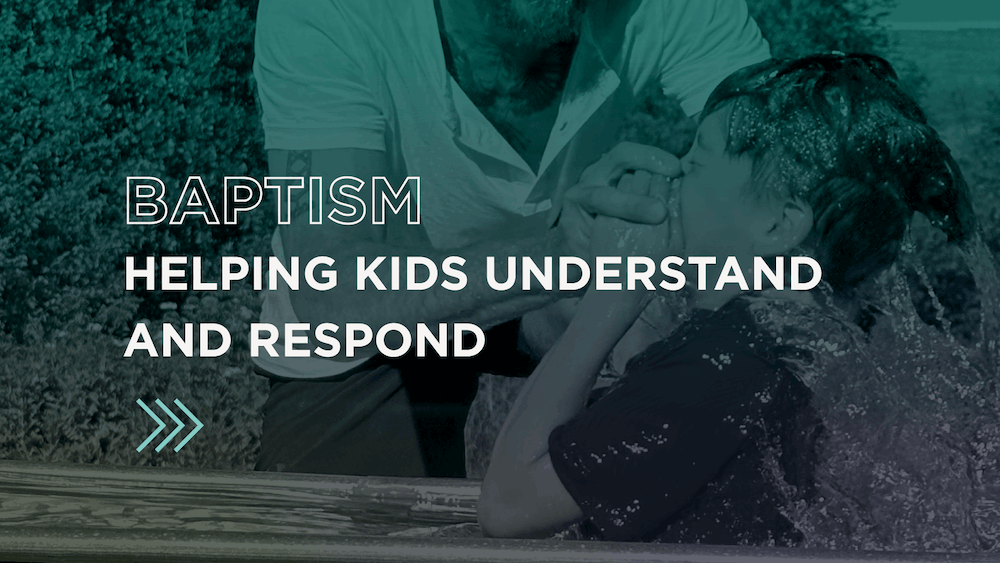
Parent Introduction
When your child starts asking about baptism, or tells you they want to be baptized, it can bring up a lot of questions for a parent.
Do they really understand what baptism means? Are they responding to Jesus, or do they just want to do what they’ve seen someone else do? How much do they need to understand? Are they old enough? What if I’m not sure they’re ready?
Those are good questions, but this doesn’t have to become a test your child has to pass. Their interest in baptism gives you an opportunity to slow down, get curious, and pay attention to what Jesus may already be doing in them.
Our goal isn’t simply to get our kids baptized. Our goal is to disciple our kids to know, love, trust, and follow Jesus. Baptism belongs inside that ongoing journey.
Big Idea: Baptism is a way followers of Jesus identify with his death and resurrection and publicly declare that they belong to Jesus and are following him into new life.
1. Start With Jesus, Not Baptism
Before asking whether your child understands baptism, start with Jesus.
Throughout the New Testament, baptism is connected to repentance, belief, and following Jesus. So when a child expresses interest in baptism, one of the best things we can do is become curious about their relationship with Jesus.
You don't need to interrogate them or look for the "right" answers. Have a conversation. Kids usually won't explain their faith with the theological precision of an adult. That's okay. Don't mistake childlike language for a lack of genuine faith.
Instead, listen to what your child is actually saying. What do they believe about Jesus? What do they understand about what he has done? Why do they want to follow him? What seems to be happening in their relationship with him?
You might be surprised by what you hear when you give them room to talk.
Questions to Explore Together
Who is Jesus to you?
What do you believe Jesus has done for you?
What does it mean to follow Jesus?
Why do you want to follow him?
What do you think Jesus is doing in your life right now?
Why are you thinking about baptism?
Don't rush through these questions. And don't worry about getting through all of them. Let the conversation go wherever it needs to go.
2. Help Them Understand Baptism
One of the beautiful things about baptism is that it's something kids can see and experience with their whole bodies.
Paul writes in Romans, “We were therefore buried with him through baptism into death in order that, just as Christ was raised from the dead through the glory of the Father, we too may live a new life.” (6:4)
Baptism tells the story of Jesus. Jesus died. Jesus was buried. Jesus rose again.
And when we are baptized, we identify ourselves with Jesus in his death and resurrection. We go under the water, picturing being buried with Christ. We come back out of the water, picturing being raised with Christ to walk in new life.
Baptism doesn't save us. Jesus does. Baptism is a response of faith and obedience that publicly identifies us with him.
You might say: “Baptism tells the story of what Jesus has done. Jesus died, was buried, and rose again. When someone follows Jesus into baptism, they go under the water and come back up. It shows that they belong to Jesus and have been given a new life with him.”
Or: “Baptism is one of the ways Jesus gave us to show that we trust him and want to follow him. It's something we do with our whole body that says, ‘I belong to Jesus.’”
Explore Scripture Together
Instead of only explaining baptism to your child, discover it together.
Read a few baptism stories and ask simple Discovery Bible Study questions:
Matthew 3:13–17 — Jesus is baptized
Acts 2:37–41 — The first followers respond to the Gospel
Acts 8:26–39 — Philip and the Ethiopian
Acts 16:25–34 — The Philippian jailer
Romans 6:1–4 — Buried and raised with Christ
After reading, ask:
What does this story tell us about God?
What does it tell us about people?
What do you notice about baptism?
Why do you think this person wanted to be baptized?
Is there anything here you don't understand?
What do you think Jesus might be saying to you?
Let Scripture do some of the discipling.
3. How Do I Know if My Child Is Ready?
This is often the question underneath all the other questions.
We can be tempted to look for an age, a particular level of understanding, or the ability to explain baptism using all the right words.
Scripture doesn't give us a baptism exam. Instead of only asking, “Do they understand enough?”, it may be more helpful to ask: Is my child expressing genuine trust in Jesus and a desire to follow him? Do they understand that baptism identifies them with Jesus and is a public response to following him?
Your child doesn't need to understand everything about baptism before being baptized. None of us did. At the same time, we don't need to rush a child toward baptism simply because they expressed interest. But you also don't have to shut the conversation down with a “no.”
If you're unsure, keep discipling.
Your child's interest in baptism is an opportunity to get curious about what Jesus may already be doing in them. Keep talking. Read stories of baptism in Scripture together. Ask questions. Let them ask questions. Pray together. Invite them to keep following Jesus in concrete ways.
You might say: “I love that you're thinking about baptism. Let's keep talking about it together. I want to hear what Jesus is doing in you, and we can keep learning about baptism together.”
We don’t want to make anyone “prove” they are ready for baptism, much less our own children. And it shouldn’t be about trying to get them across a religious finish line.
Our goal is to help our children follow Jesus. Baptism belongs inside that ongoing life of discipleship.
If you're still uncertain, consider inviting another trusted disciple-maker who knows your child into the conversation. Sometimes another person can help you listen, ask good questions, and discern what Jesus may be doing.
4. Let Baptism Become Disciple-Making
Baptism is personal, but it isn't private.
When someone is baptized in the New Testament, it becomes a visible declaration of what Jesus has done and an opportunity for others to see and hear the Good News.
That means your child's baptism isn't only an important moment for your child. It can also become an opportunity for your child to participate in Jesus' mission.
Think About Their People
Don't only make the invitation list for them. Let your child name their people.
Ask your child:
Who would you really want to be there?
Who are the people you spend time with at school?
Who are your closest friends?
What about teammates, neighbors, or family members?
Are there people from your Context Map or BLESS Five that you want to invite?
Who would you want to hear why you're choosing to follow Jesus?
Their baptism can become an opportunity to invite the very people Jesus has already placed around them to see and hear what he is doing in their life.
Help Them Tell Their Story
Before the baptism, help your child think about what they want to say.
Don't write a testimony for them to memorize. Help them find their own words.
Three simple questions can help:
Who is Jesus to me?
Why do I want to be baptized?
What does following Jesus look like for me now?
For younger children, you may need to ask questions and help them put their thoughts into words. Older children may want to write something themselves.
Either way, resist the temptation to make their story sound more impressive, mature, or spiritual. A child's simple story about loving and following Jesus is worth hearing.
5. Make Baptism a Community Celebration
Baptism isn't something we have to leave to a pastor, church building, or special service.
In Matthew 28:18–20, Jesus gives his disciples the responsibility to make disciples and baptize them.
So invite the people who have been part of your child's discipleship. Invite their microchurch. Invite grandparents, friends, neighbors, teachers, coaches, teammates, and the people your child has been praying for.
Let them celebrate. Let your child tell their story. Pray over them. Speak blessing over them.
And when possible, consider inviting the person or people who have been actively discipling your child to participate in baptizing them.
This is a moment worth celebrating. But remind your child, and yourself, that baptism isn't the end of their discipleship journey. It's another step in a lifetime of following Jesus. That's what we're after. We're not simply raising kids who have been baptized.
We're raising disciple-makers who know how to follow Jesus and help others do the same.
Take the Next Step Together
Set aside time this week to read one of the baptism scriptures with your child. Listen to their questions and pray together. For more support as you help your child follow Jesus, explore KC Underground’s disciple-making resources.
Exploring baptism for yourself, too?
Read the KC Underground Baptism Primer for more on what baptism means and what to expect.